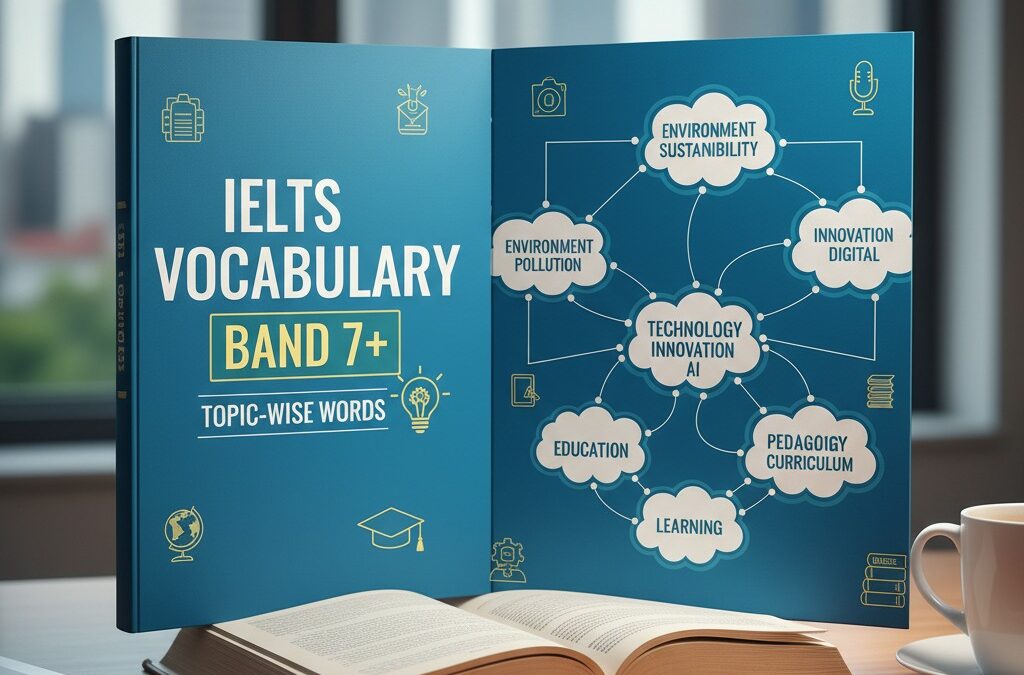
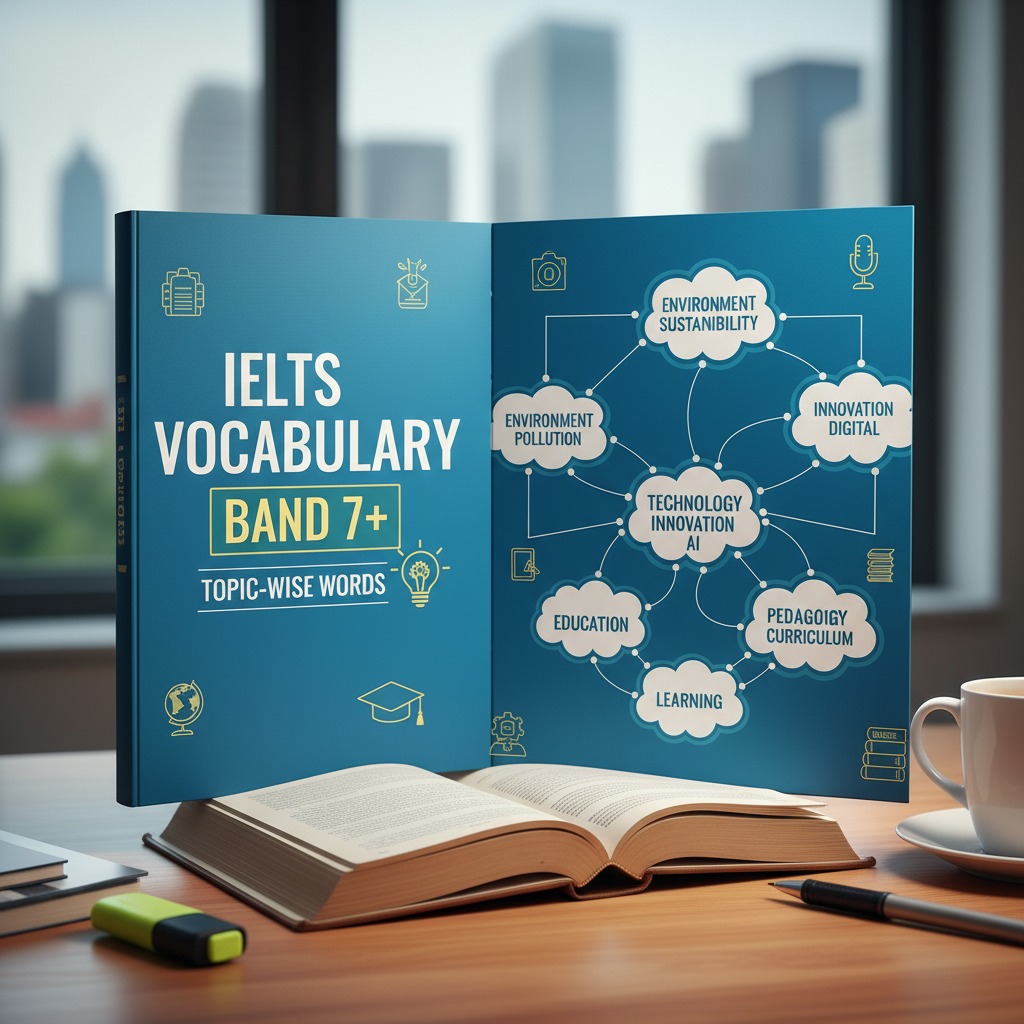
IELTS Vocabulary for Band 7+ With Topic-Wise Words
Achieving a Band 7 or higher in the IELTS exam requires not only a good grasp of grammar and pronunciation but also a strong vocabulary. Using a wide range of appropriate and precise words can significantly boost your speaking and writing scores. In this blog post, we will explore essential topic-wise vocabulary that can help you reach Band 7+ in IELTS.
Why Vocabulary Matters in IELTS
Vocabulary plays a crucial role in all parts of the IELTS test — Listening, Reading, Writing, and Speaking. Demonstrating a rich and varied vocabulary allows you to express your ideas clearly and accurately. It also shows the examiner your ability to use language flexibly and appropriately.
Topic-Wise IELTS Vocabulary for Band 7+
Master these high-scoring IELTS vocabulary words to sound more fluent, academic, and natural in your Writing and Speaking tests.
Education
Environment
Technology
Health
Work & Employment
Society & Culture
Tips to Learn and Use Topic-Wise Vocabulary
Read Extensively
Read books, newspapers, blogs, and academic articles to learn vocabulary naturally in context.
Practice Writing
Use newly learned words in essays, reports, and IELTS Writing Task 2 practice answers.
Speak Regularly
Use advanced vocabulary during speaking practice to improve fluency and confidence.
Use Flashcards
Create vocabulary flashcards with meanings, synonyms, and example sentences.
Learn Synonyms
Learning synonyms helps avoid repetition and improves lexical flexibility in IELTS.
Review Daily
Revise vocabulary every day to improve retention and long-term memory.
Final Thoughts
Expanding your vocabulary by focusing on common IELTS topics can make your speaking and writing more precise, natural, and effective.
Aim to learn these words actively and use them confidently during your IELTS preparation. Remember, accuracy and appropriate usage are more important than memorising difficult words.
Explore More IELTS Study Resources
Strengthen your IELTS preparation with expert guides, practice materials, and proven Band 7+ strategies.
How to Improve Your IELTS Writing Skills
Learn practical techniques to improve grammar, coherence, vocabulary, and essay structure.
IELTS Reading Tips to Get Band 7+
Boost reading accuracy and speed with smart IELTS reading strategies and exam techniques.
Mastering the Speaking Section of the IELTS
Improve fluency, confidence, and speaking performance for all IELTS speaking parts.
Comprehensive Guide to IELTS Listening Tasks
Understand IELTS listening question types and improve your listening band score.
Effective Time Management Tips for IELTS Success
Learn how to manage your exam time efficiently across all IELTS modules.
How to Achieve a High Band Score in IELTS
Discover proven preparation methods and habits used by Band 7+ IELTS candidates.
What vocabulary score is needed for IELTS Band 7?
To achieve Band 7 in IELTS, you need to use a wide range of vocabulary accurately and appropriately. This includes topic-specific words, less common expressions, and correct collocations in both speaking and writing tasks.
How can I improve my IELTS vocabulary quickly?
You can improve your IELTS vocabulary by reading English newspapers, practising writing essays, learning synonyms, using flashcards, and speaking regularly using new words in context.
Is topic-wise vocabulary important for IELTS?
Yes. Topic-wise vocabulary helps you discuss common IELTS subjects such as education, technology, environment, health, and society more naturally and confidently.
Which IELTS section needs vocabulary the most?
Vocabulary is important in all IELTS sections, but it plays a major role in Writing and Speaking because examiners directly assess your lexical resource and word usage.
How many vocabulary words should I learn for IELTS?
There is no fixed number, but focusing on high-frequency IELTS topic vocabulary and understanding how to use words correctly is more important than memorising large word lists.
Can advanced vocabulary increase my IELTS band score?
Yes, using advanced and accurate vocabulary appropriately can improve your Lexical Resource score. However, avoid using difficult words incorrectly or unnaturally.
What are the most common IELTS vocabulary topics?
Common IELTS vocabulary topics include Education, Environment, Technology, Health, Work and Employment, and Society and Culture.
Should I use synonyms in IELTS Writing?
Yes. Using synonyms helps avoid repetition and demonstrates lexical flexibility, which is important for achieving Band 7 or higher in IELTS Writing.
What is the best way to remember IELTS vocabulary?
The best methods include reading regularly, using flashcards, writing example sentences, practising speaking, and reviewing words daily. Learning words in context improves long-term memory.
Can I use informal vocabulary in IELTS?
It depends on the task. Informal vocabulary may be acceptable in Speaking, but Writing Task 2 usually requires a more formal academic style. Avoid slang and overly casual expressions.