
10 Common Mistakes of B2 English Exam Students Make (And How to Avoid Them)
Preparing for a B2 English exam can be challenging, but knowing the common pitfalls can help you avoid them and boost your confidence. Here are 10 most common mistakes of B2 English Exam candidates, along with practical tips to overcome them.
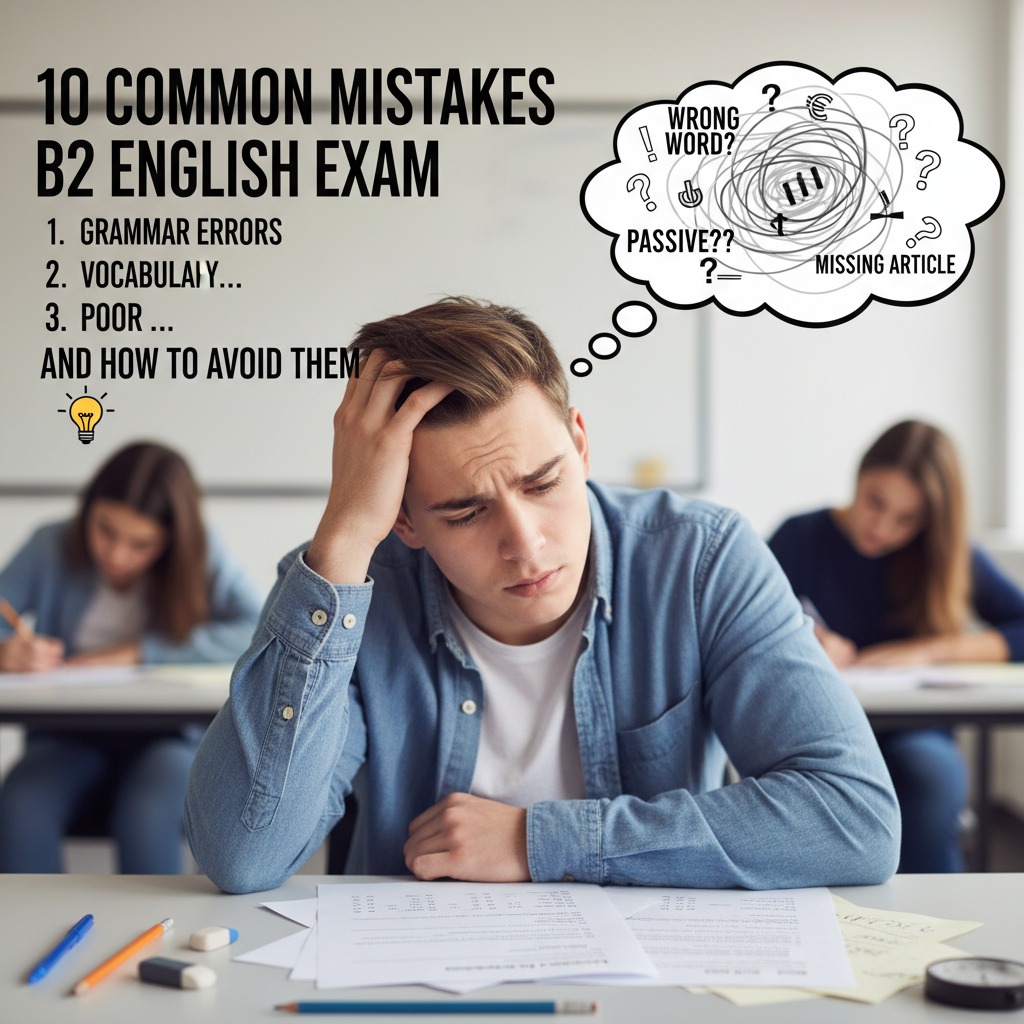
- Grammar Mistakes
Many students lose marks due to simple grammar errors such as incorrect verb tenses, subject-verb agreement, and misuse of prepositions.
How to avoid: Review key grammar rules regularly and practice with exercises focused on common B2-level structures. Use grammar check tools and ask teachers for feedback on your writing. - Reading Comprehension Traps
Students often miss the main idea or fall for tricky questions designed to confuse, such as those involving inference or paraphrasing.
How to avoid: Read the questions carefully before the text and underline keywords. Practice skimming and scanning techniques to identify relevant information quickly. - Listening Distractions
Background noise or unfamiliar accents can cause students to miss important details in listening tasks.
How to avoid: Practice listening to a variety of English accents and use headphones in a quiet environment during practice. Take notes while listening to help remember key points. - Writing Task Structure Problems
Failing to organise essays or emails logically can make your writing unclear and reduce your score.
How to avoid: Plan your writing before starting. Use clear paragraphs with topic sentences, and follow the required format for each task. Practice writing under timed conditions. - Speaking Confidence Issues
Nervousness can lead to hesitation, short answers, or losing track of ideas during the speaking test.
How to avoid: Practice speaking regularly with friends or language partners. Record yourself to improve fluency and pronunciation. Prepare common topics and practice answering questions aloud. - Time Management Mistakes
Spending too much time on one section or question can leave you rushed in others.
How to avoid: Familiarise yourself with the exam format and practice full-length tests under timed conditions. Allocate time limits for each section and stick to them. - Vocabulary Limitations
Using repetitive or basic vocabulary can lower your score in all parts of the exam.
How to avoid: Build your vocabulary by reading widely and learning synonyms. Practice using new words in context during writing and speaking exercises. - Misunderstanding Instructions
Ignoring or misinterpreting exam instructions can result in answering the wrong questions or not following the task requirements.
How to avoid: Always read instructions carefully and double-check before starting each task. Practice with past papers to get used to different types of instructions. - Overlooking Spelling and Punctuation
Small spelling or punctuation errors can affect clarity and reduce your marks.
How to avoid: Proofread your writing to catch mistakes. Practice common spelling rules and punctuation usage relevant to B2 level. - Lack of Practice with Exam Format
Not being familiar with the exam structure can cause confusion and anxiety on test day.
How to avoid: Take multiple practice exams to get comfortable with the format, question types, and timing. Use official preparation materials whenever possible.
Frequently Asked Questions
Common mistakes include poor time management, misunderstanding reading questions, weak grammar, limited vocabulary, and not fully answering writing tasks.
The exam can feel challenging for learners moving from B1 level, but with proper preparation and regular practice, most students can pass successfully.
Practice reading newspapers, articles, and exam-style texts regularly. Focus on skimming, scanning, and understanding vocabulary from context.
Preparation time depends on your current level. Many learners need between 2 to 6 months of consistent study and practice.
Plan your answer before writing, use clear paragraphs, check grammar carefully, and make sure you fully answer the question prompt.
By understanding these common mistakes and applying these strategies, you can improve your performance and increase your chances to pass your B2 English test with confidence.
B2 English mistakes, B2 exam tips, B2 English preparation, pass B2 English test